
NAIROBI, KENYA — 30 September 2026 — Industry leaders have called for localised economic resilience and human-centric waste management frameworks as high-level deliberations wrapped up today at Nairobi Street Kitchen during the 11th Annual Circular Economy Conference. Co-organised by Sustainable Inclusive Business Kenya under the Kenya Private Sector Alliance (KEPSA), the Kenya Plastics Pact (KPP), and The Rock Group under the theme ‘Resilience,’ the event focused on the structural frameworks, local innovations, and policy requirements needed to scale circular systems.
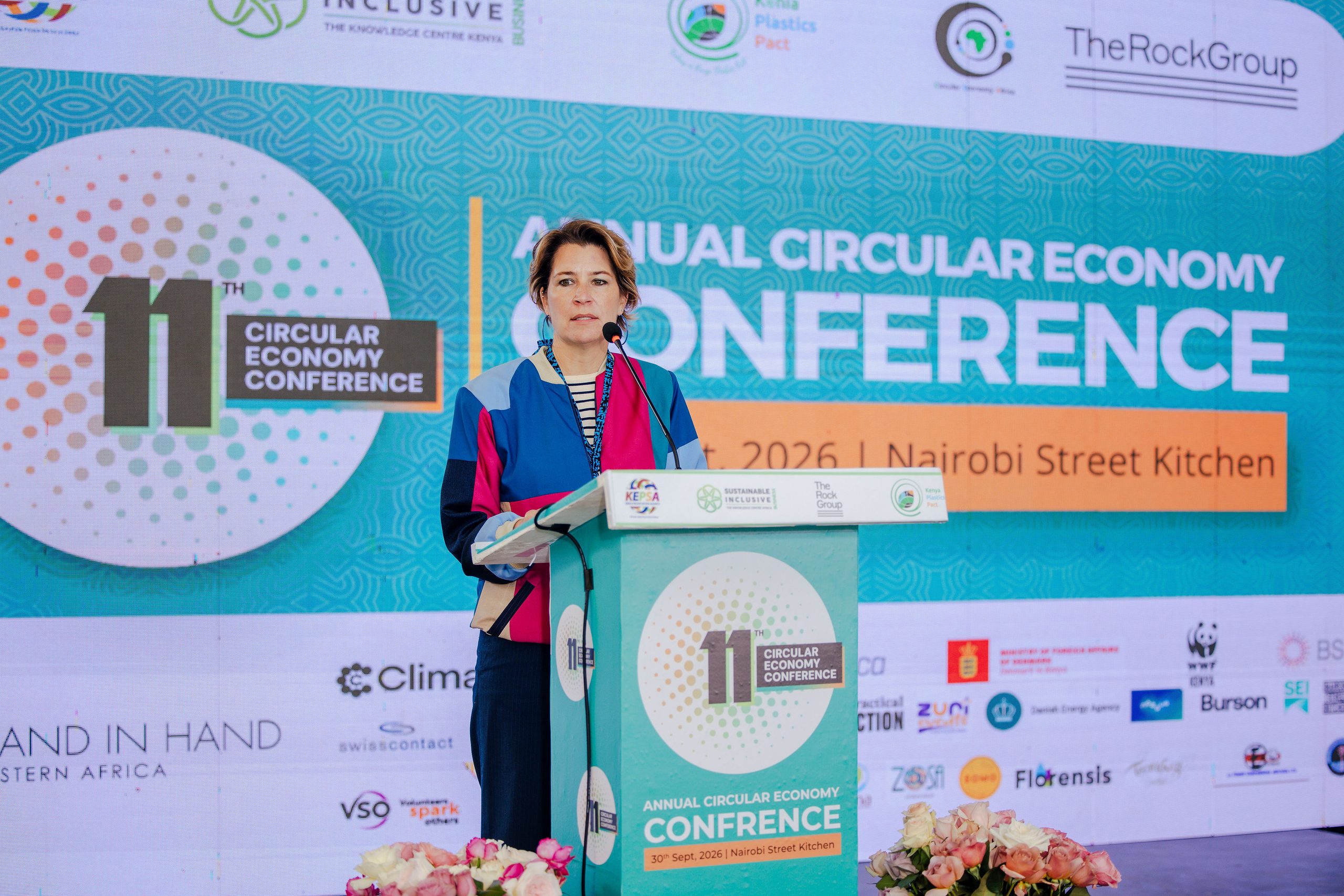
Karin Boomsma, Project Director, Sustainable Inclusive Business Kenya and KPP, opened the event by emphasising that circularity goes far beyond an environmental agenda, serving as a core economic strategy to withstand climate pressures and global supply chain shocks.
“Circularity gives us an opportunity to ask a different question: What can we produce locally? What can we repair locally? What can we reuse locally? What materials do we already have around us? And what local solutions can we create for local problems?” Ms Boomsma asked, pointing to local production and resourcefulness as key drivers of resilience.
Building on that systemic view, keynote speaker Albert Wambugu, CEO of Hand in Hand Eastern Africa, highlighted the human element of material flows, emphasising that circularity had to support the micro-entrepreneurs, youth, and women who drove grassroots recovery efforts. He explained that circularity was often discussed purely as a conversation about materials, but noted that delegates also wanted to look at the people behind those materials that day.
“Circular entrepreneurs do not necessarily lack ideas or ambition. What can hold them back are the systems around them — collection networks, aggregation, access to materials and producer responsibility pathways — which are not always designed with smaller businesses in mind,” remarked Mr Wambugu.
Mr Wambugu further called for better aggregation and collection networks designed with smaller businesses in mind, noting that because many of these individuals operated informally and lacked the support systems needed for business growth, the circular economy and the social economy could not truly be separated.
Carl Kibwage of the Konrad-Adenauer-Stiftung (KAS) Kenya focused on the balancing act required between commercial viability, environmental targets, and social welfare. He observed that investors typically asked how quickly a business could grow and what return it could offer, while environmental organisations asked about the difficult plastics that nobody collected, and workers asked whether the job would provide a dependable income and safe working conditions. Kibwage stressed the need for honest assessments of trade-offs and robust public leadership.
Textile Sector Findings Expose Gaps in Second-Hand Clothing Labelling
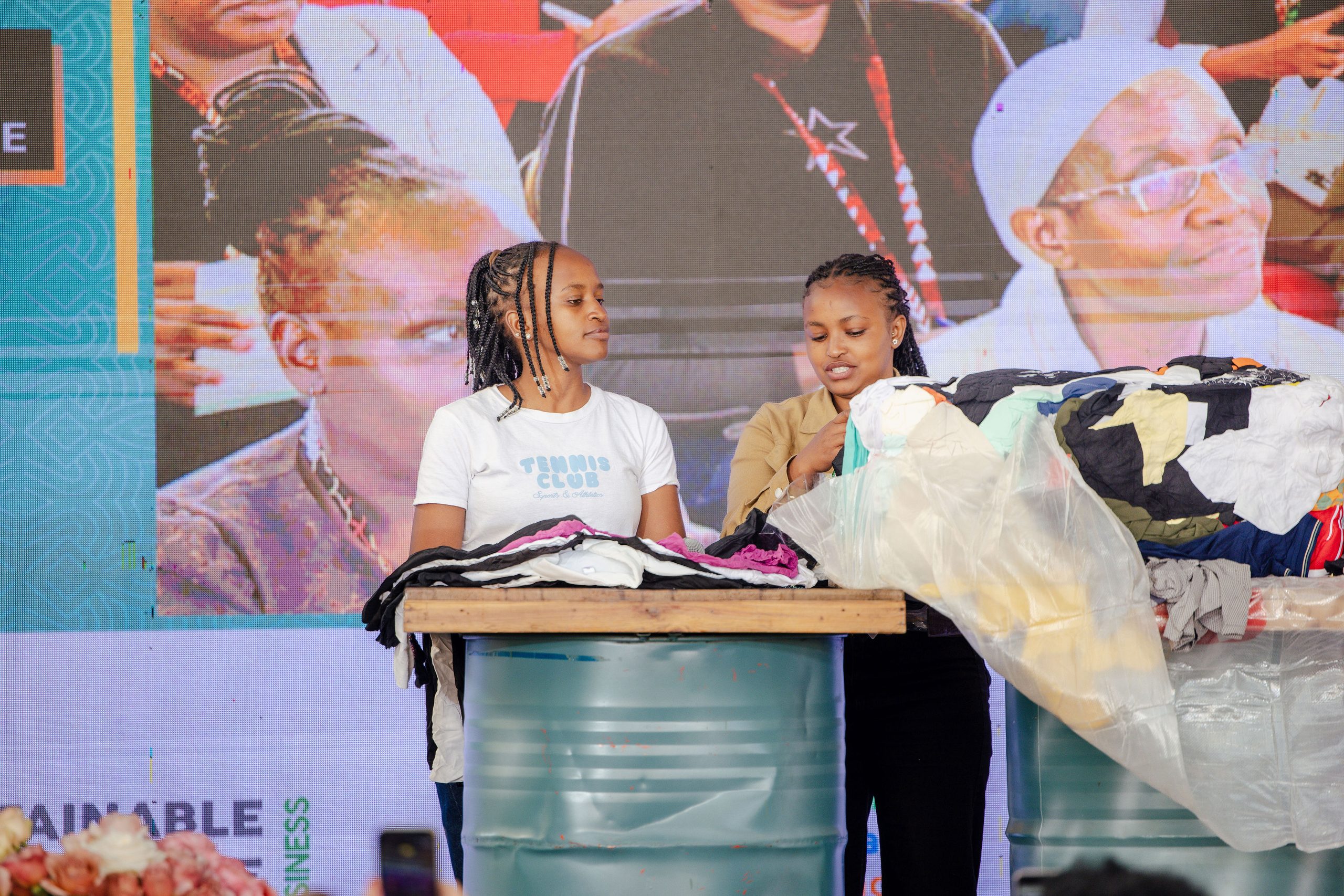
The textile sector featured prominently in the day’s discussions. Jeremy Kaburu, Circular Economy and Research Specialist at KPP, unpacked a real mitumba bale labelled “Grade A” before delegates, testing it against benchmarks for quality, origin and profitability. The exercise illustrated a broader problem, he said: grading and labelling practices in the second-hand clothing trade often diverge sharply from reality, leaving traders to absorb the risk.
The theme was also carried into an invite-only validation workshop, where initial findings from a new sector-wide study of second-hand textile flows were presented, covering working conditions, product quality, social and economic opportunities, and environmental impact. Henry Munyao of WWF-Kenya, who introduced the session alongside Ms Boomsma, said the findings would help ground future policy conversations in evidence rather than assumption.
Pre-Launch of Kenya’s National Circular Economy Strategy and Implementation Plan (CESIP)
The conference also saw the public pre-launch of Kenya’s National Circular Economy Strategy and Implementation Plan (CESIP), a major national initiative spearheaded by Kenya’s Ministry of Environment, Climate Change and Forestry under the patronage of Principal Secretary Dr. Eng. Festus K. Ng’eno, and developed in partnership with the Kenya Private Sector Alliance (KEPSA) and an Intellecap Advisory Services consortium. The strategic roadmap sets out a shift for Kenya away from a wasteful linear “take-make-dispose” economy toward resource efficiency.
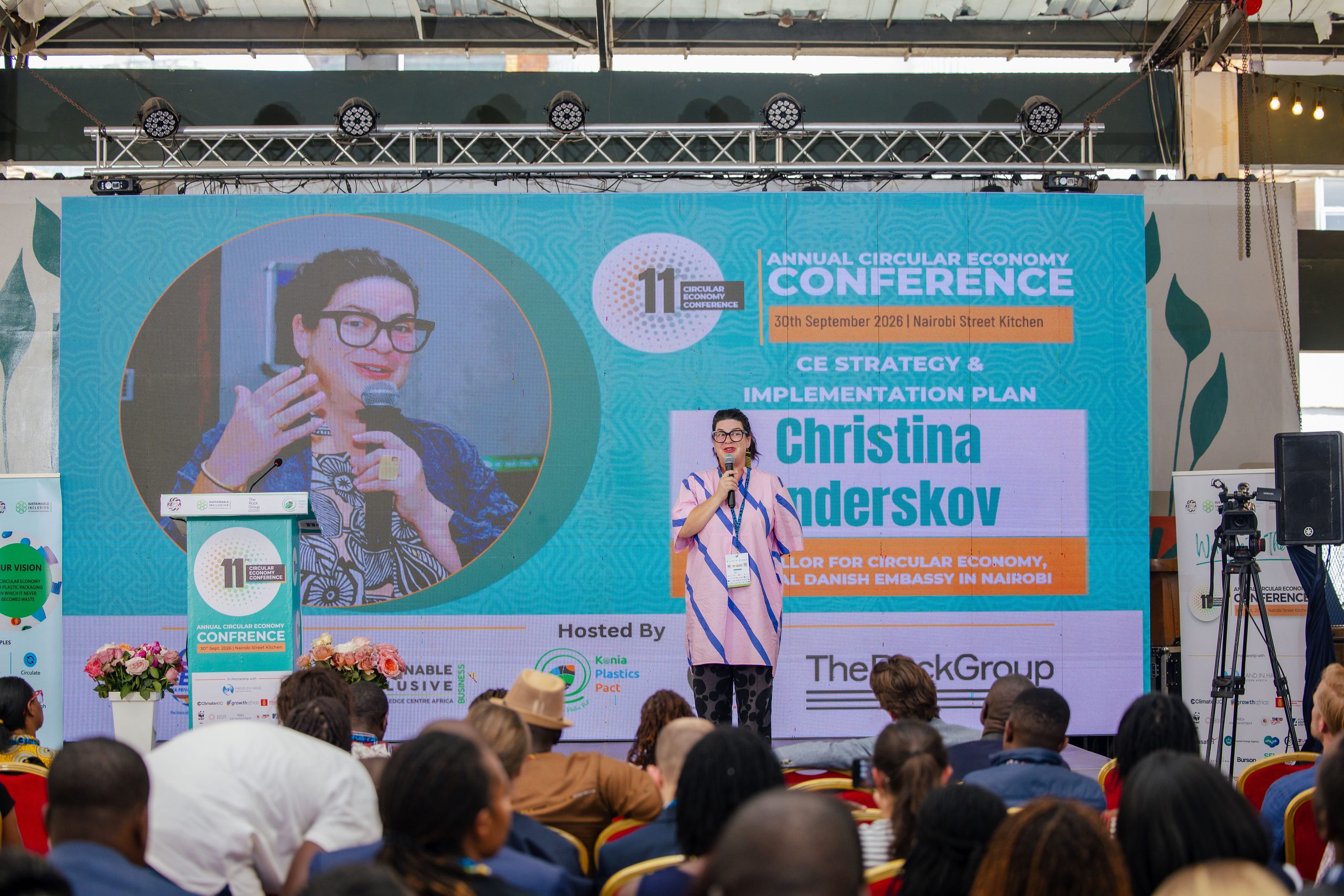
Speaking at the pre-launch, Christina Anderskov, Counsellor for Circular Economy at the Royal Danish Embassy in Nairobi, said the strategy’s implementation would focus on improving access to finance and building material recovery infrastructure across the country.
Launched during the conference was The Circle, a new community of practice hosted by Climate-KIC, GrowthAfrica and Wasafiri, focused on mobilising capital for circular ventures in Nairobi. Throughout the conference, dedicated sessions brought SME founders together with investors and corporate representatives for practical finance clinics designed to turn circular business ideas into investable propositions.
Also present in the room were senior representatives from government, diplomacy, and the private sector, including Dr. Asma Awadh (Resource Mobilization Manager, Conservation Programs, WWF-Kenya), Karnika Yadav (Partner & Director-Africa, Intellecap Advisory Services), Rosemary Amondi (Senior Advisor, Aspen Network of Development Entrepreneurs), Elizabeth Maloba (Lead Facilitator, The Circle/Wasafiri), and senior officials from NEMA, KEPRO, KIPPRA, PAKPRO, and the Kenya Association of Waste Recyclers.
Visual Assets: High-resolution photos and video cuts from conference are available for your use:https://drive.google.com/drive/folders/1GP4l0-YKZdQh_8g52BluMIia9uSv-Ct2?usp=drive_link
About KEPSA
The Kenya Private Sector Alliance (KEPSA) is the apex body of the private sector in Kenya, bringing together businesses, business associations, and chambers of commerce to shape public policy, drive partnerships, and advance sustainable economic growth. Representing a reach of over 2 million businesses — from startups and SMEs to large local enterprises and multinational corporations with a base in Kenya. KEPSA serves as a unified voice of the private sector and a platform for creating economic value, social impact, and environmental sustainability through both its industry and foundation arms.
KEPSA is also the focal point for the East African Business Council (EABC) in Kenya and hosts the International Chamber of Commerce (ICC Kenya), strengthening Kenya’s integration into regional and global business networks.
Website: www.kepsa.or.ke
About Sustainable Inclusive Business (SIB-Kenya)
Sustainable Inclusive Business Kenya is a knowledge Center established through a fruitful partnership between the Kenya Private Sector Alliance (KEPSA) and MVO Nederland with the support of the Embassy of the Kingdom of the Netherlands in Kenya. SIB-K spearheads the adoption of sustainable and circular business practices in Kenya through impactful knowledge sharing and strategic collaborations.
Website: www.sustainableinclusive.org
For more information, visit circulareconomyafrica.org/media or contact:
Maina Nahashon Muchiri
Communication Lead, Kenya Private Sector Alliance
nahashon@sustainableinclusivebusiness.org | 0716 498 989